Baseline Murrieta ConcreteBaseline Murrieta Concrete

Foundation raising in Murrieta, CA - a house resting on firm ground again

Floors running downhill or cracks spreading across your walls? We find where your house settled and support it from firmer ground below.

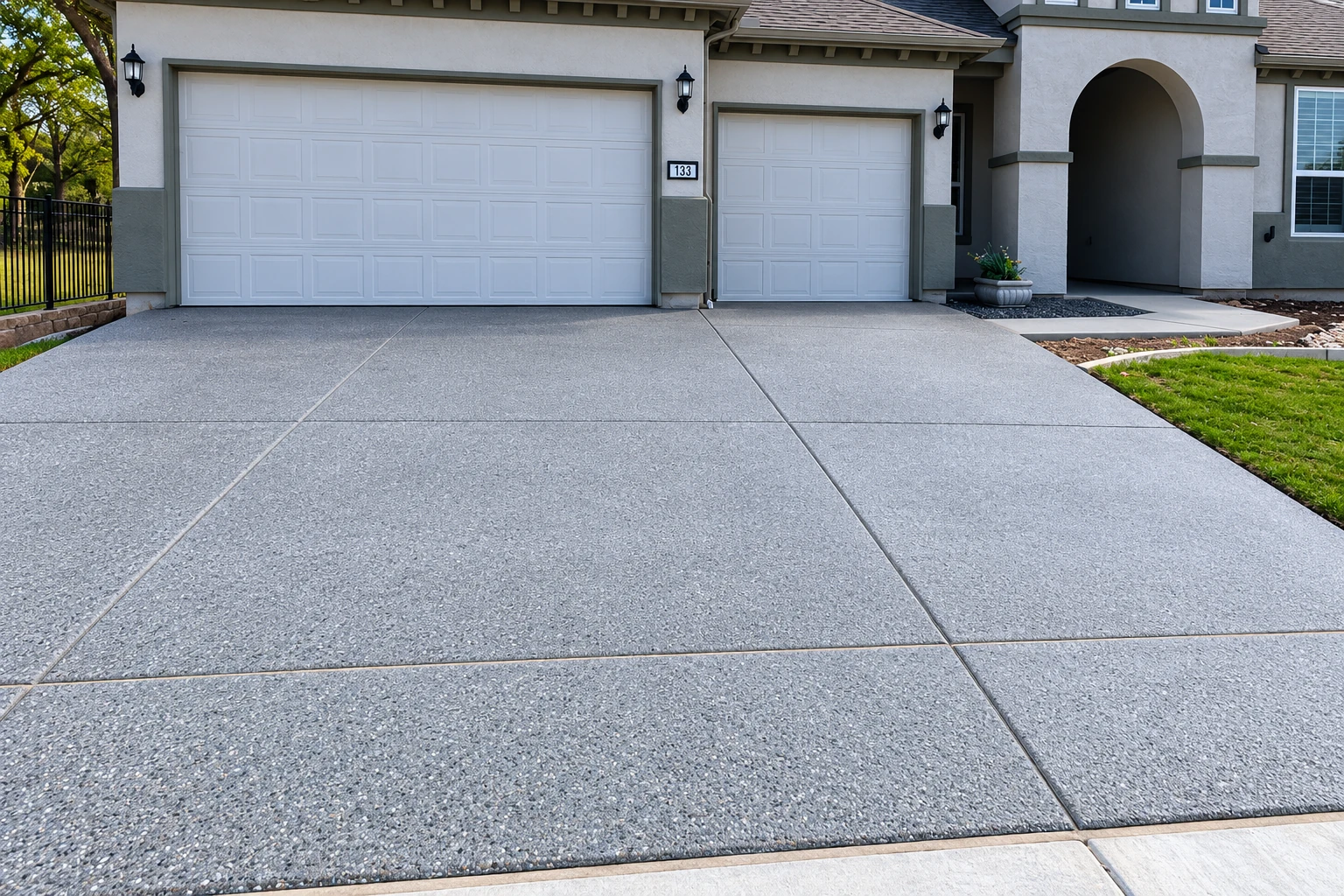
A broad, speckled gray concrete driveway leads to a house with two white garage doors.

Foundation raising in Murrieta means steadying a foundation that has settled, usually with piers, which are supports driven deep into the ground under the house, so the sinking stops and the low side can be brought back up.

How do you fix a sinking foundation in Murrieta?

Most people call us after they notice a floor that runs downhill, a crack that keeps growing across drywall or a slab, or a gap opening at a door frame. Those signs mean part of the house has dropped while the rest stayed put, and where they bunch up usually points to the wall or corner that needs support.

What moves the price is how far the house has dropped, how many supports it needs, how deep firm ground sits and how hard it is to reach the foundation past slabs, plants and fences. The schedule turns on the repair method and the city's permit review. I measure before I put a number on anything, and you get your figure in a written estimate.

What decides how your foundation gets raised

Every settled house is a little different, so the repair starts with what your house is showing us and what the ground under it is like.

Where the damage shows up

Cracks and sloping floors are a map of the problem, because they gather near the part of the foundation that sank. I walk the house inside and out, note where each one shows and measure how far the low side has dropped, since that measurement decides which repairs are even on the table.

Digging along the house

Pier work is slow and fairly invasive, because the soil along the foundation gets dug out until the footing, the wide base the wall sits on, is exposed for the pier bracket. Plan on open trenches beside your house while the job runs, and on keeping kids and pets clear of them.

How piers reach firm ground

Push piers are driven down hydraulically until they reach very dense soil or bedrock. Helical piers are anchored to the foundation and then spun down into the ground with an auger, a bit like a big screw. Either way, the point is to rest your house on deeper ground instead of the soil that let it sink.

What happens after you call about a settling foundation?

Here's how a foundation job goes with us, from your first call to the walk-through at the end, including the one wait that sits outside our control.

  1. 1

    Call or send the form

    Phone (951) 477-4538 or use the contact form and tell us what you've noticed around the house. We'll set a time for me to come out and look at it in person.

  2. 2

    I measure and write it up

    I come out myself, walk the house, measure how far it has dropped and look at where water runs around it. You get a written estimate, and I explain the method I'd use and my reasons.

  3. 3

    Permit review, then the work

    When the job needs a permit, the city's review currently takes 15 business days, so the work starts after that. Our own crew does the digging and pier work, and I check the setup before any concrete goes in.

  4. 4

    Walk the finished job together

    When the work is done, I walk it with you inside and out and show you what we did. Keeping water away from the foundation afterward matters here, for the soil reasons covered below.

Request an estimate

How we approach foundation raising

Before I talk about a fix, I want to know where the cracks and sloping floors show up and how far the house has actually dropped, measured rather than guessed. Slight settling and severe settling call for different repairs, and I'd rather explain why one fits your house than pitch the one that's easiest for us.

I'll also tell you up front what the work asks of your yard, because some repairs mean open trenches along the house for a while. If the best spot for a support sits under a walk or patio, we may open just that spot with concrete cutting. If a driveway beside the house sank and cracked along with it, we can talk about replacing it through concrete driveway building.

When money's tight, the tempting move is to patch the cracks and level the floor inside. I'd put the budget into the supports under the house first, because the cracks are only the sign, and patching over a foundation that's still moving usually means paying to patch it again.

Piers down to firm ground

Piering sets supports deep under the footing, either pushed down hydraulically or spun in with an auger. It takes the most digging and the most time, but it's the route for a house that has sunk a long way.

Foam injected under the foundation

One polyurethane maker says injecting foam takes little setup, installation and breakdown, and can often be finished within a day depending on the size of the job. It's the lighter option when the settling allows it.

Get a measured plan for your settling foundation

Send the form and we'll get back to you within one business day to set a time for me to come out. The estimate is free, done at your property and written down, and there's no obligation to go ahead.

(951) 477-4538

sales@concretemurrieta.com

Foundation raising and the ground under Murrieta homes

Raising a foundation is a repair to your house, and the city's Building Safety Department issues the permit required before a building or structure is altered or repaired. When your job needs one, we handle the application and meet the inspector on site, and if we aren't sure, we check with the city before we start.

The ground here explains a lot of what we see. A city study reports that most of the loose, creek-laid soil along Murrieta Creek sits in a liquefaction hazard zone mapped by Riverside County, meaning ground that can lose its strength when shaken. That applies to land near the creek, not to every lot in the city.

Where the soil is expansive clay that swells when wet and shrinks when dry, Riverside County's safety plan says moisture control and changing how the yard drains can limit the damage. That's why I look at where your water runs, the same check we make on jobs in Temecula and Menifee.
Why Murrieta homeowners call Baseline Murrieta Concrete for foundation raising

I come out for the estimate and measure the job myself, and our own crew does the work, so the person who looked at your cracks is the one answering for the fix. I grew up on a farm fixing whatever broke, learned this trade on other people's crews and started this business in 2020.

We're licensed and insured. Your satisfaction, guaranteed. Concrete is hard to undo once it sets, so I'd rather explain my reasons at the start than leave you guessing later. When you're ready, call (951) 477-4538 or send us the form and tell us what you're seeing.

Concrete cutting

When a walkway, patio or garage slab sits right where a support has to go, a clean saw cut opens that one spot and leaves the rest in place.

Concrete driveway building

A driveway that dropped and split next to a settling house can be torn out and poured new on a dug-out, packed base once the foundation is steady.

Where we raise foundations around Murrieta

We're based in Murrieta, CA and work across the cities around it, including Temecula, Menifee and Fallbrook. If your city isn't named on the site, give us a call and ask.

Questions about raising a foundation in Murrieta

How much does foundation raising cost in Murrieta?

The cost comes down mostly to how far your house has dropped, how many supports it needs, how deep firm ground sits and how much digging it takes to reach the footing. Access around the house and the repair method play in too. I'll give you a figure for your house in a written estimate after I've measured.

Can foam injection lift my foundation instead of piers?

Sometimes, but not always. One polyurethane maker says foam injection may not be an option when settlement is severe, so how far your house has sunk decides it. That's why I measure the drop before recommending either one.

How long does foundation pier work take?

Pier installation can take anywhere from a few days to two weeks, by one homeowner guide's count, depending on the house. That's the work itself, so the city's permit review comes on top of it. Plan for open trenches and limited yard access through that whole stretch.

What should I write down before a foundation repair estimate?

Note where the cracks and sloping floors show up and roughly when you first noticed each one. Dated photos help too. That tells me whether the house may still be moving and where to start measuring when I come out.

What license does a foundation contractor need in California?

California's contractor license board describes a class for this work called pile driving and pressure foundation jacking, which includes injecting concrete or mortar into foundations to stabilize them. It's fair to ask any contractor which license they carry before anyone starts digging beside your house.

Call about your settling foundation

We answer the phone seven days a week from 8 AM to 9 PM, so call (951) 477-4538 when you spot a new crack, or send the form anytime.

(951) 477-4538Request an estimate