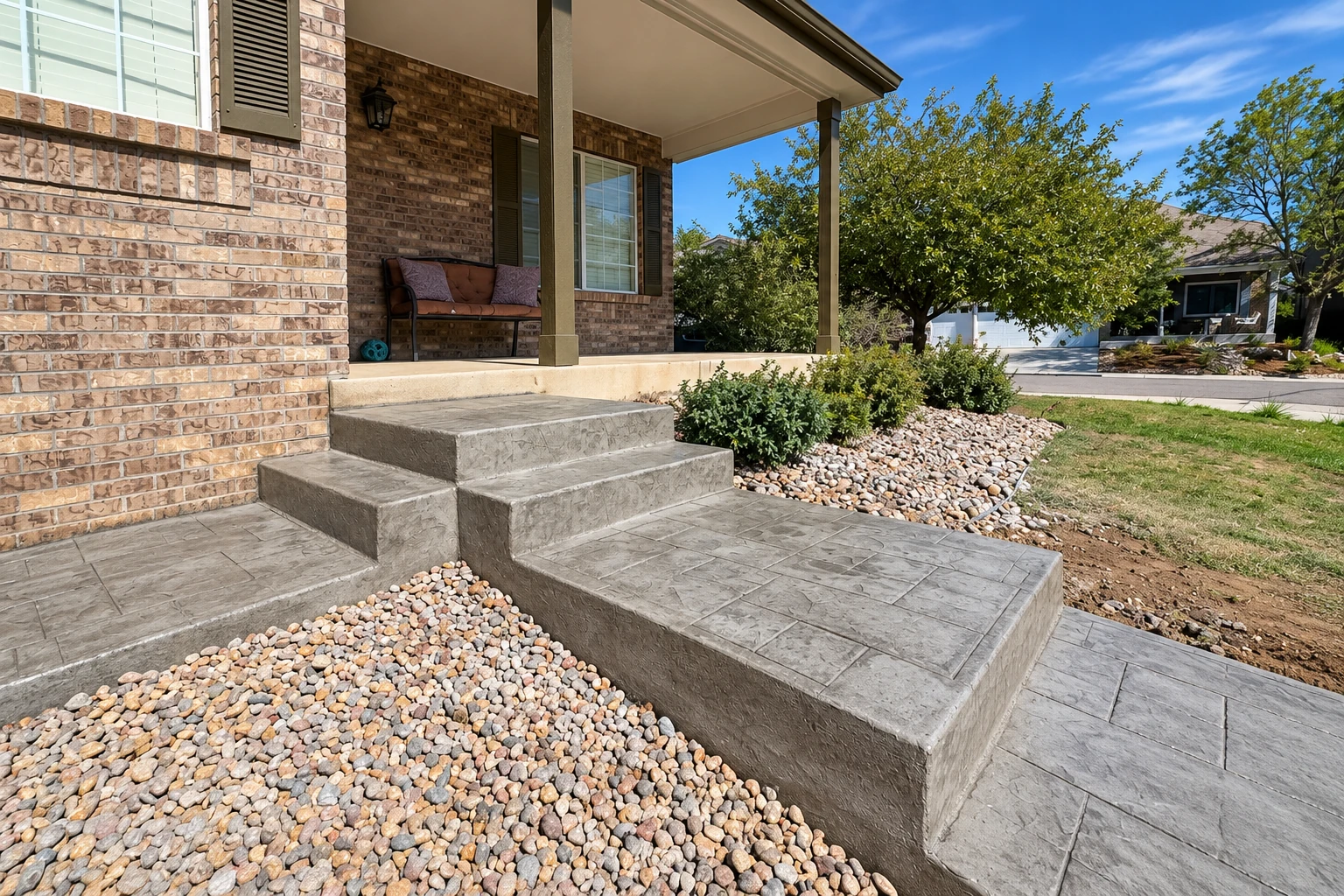
Concrete driveway building
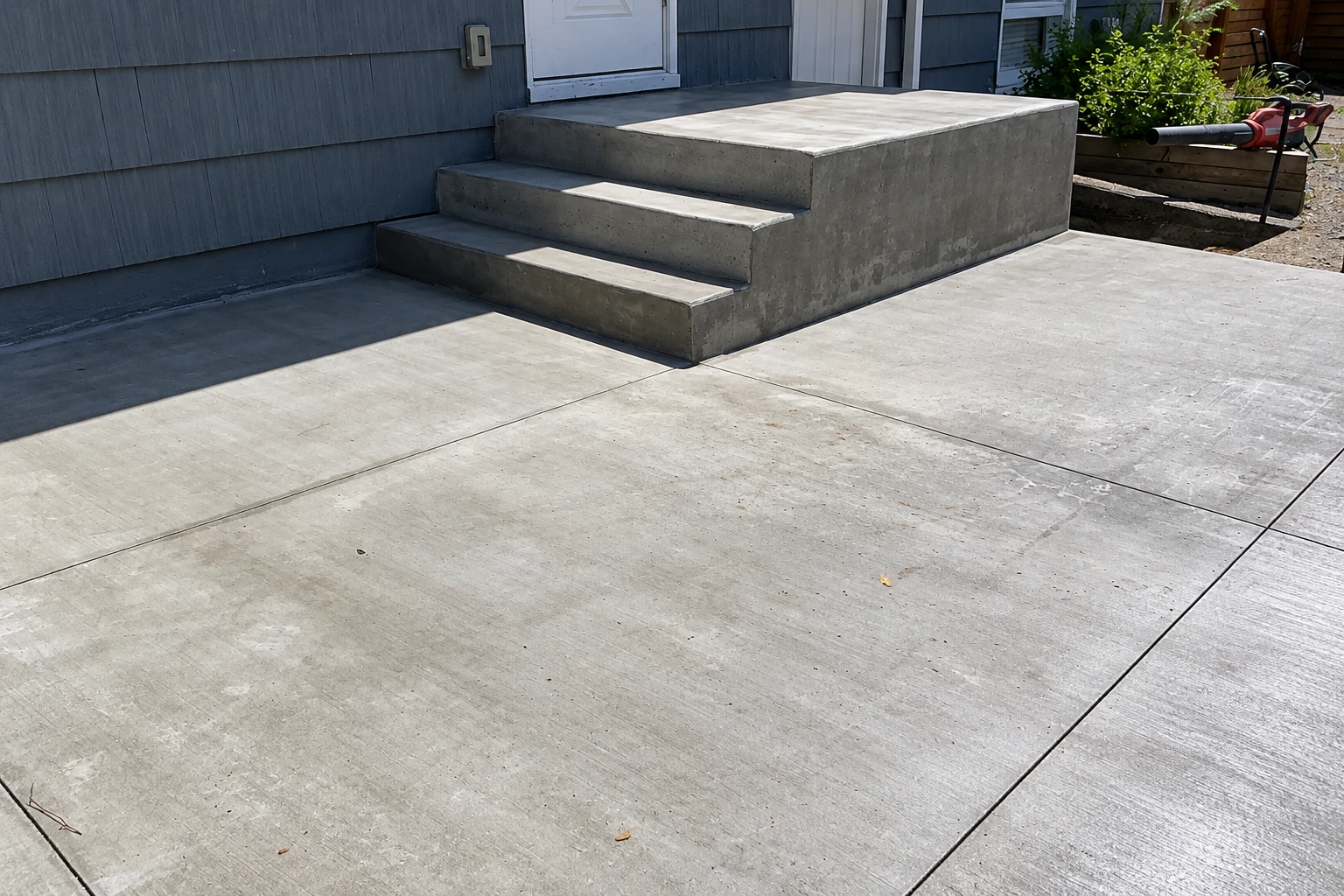
When an old driveway has sunk, cracked or holds water at the garage, we tear it out, dig to firm ground, pack a new base and pour a fresh slab.
Baseline Murrieta Concrete is a concrete contractor based in Murrieta, CA that pours driveways, patios, steps, retaining walls and slabs for homes in Lakeland Village, on the low lots near the lake and the sloped lots below the hills.
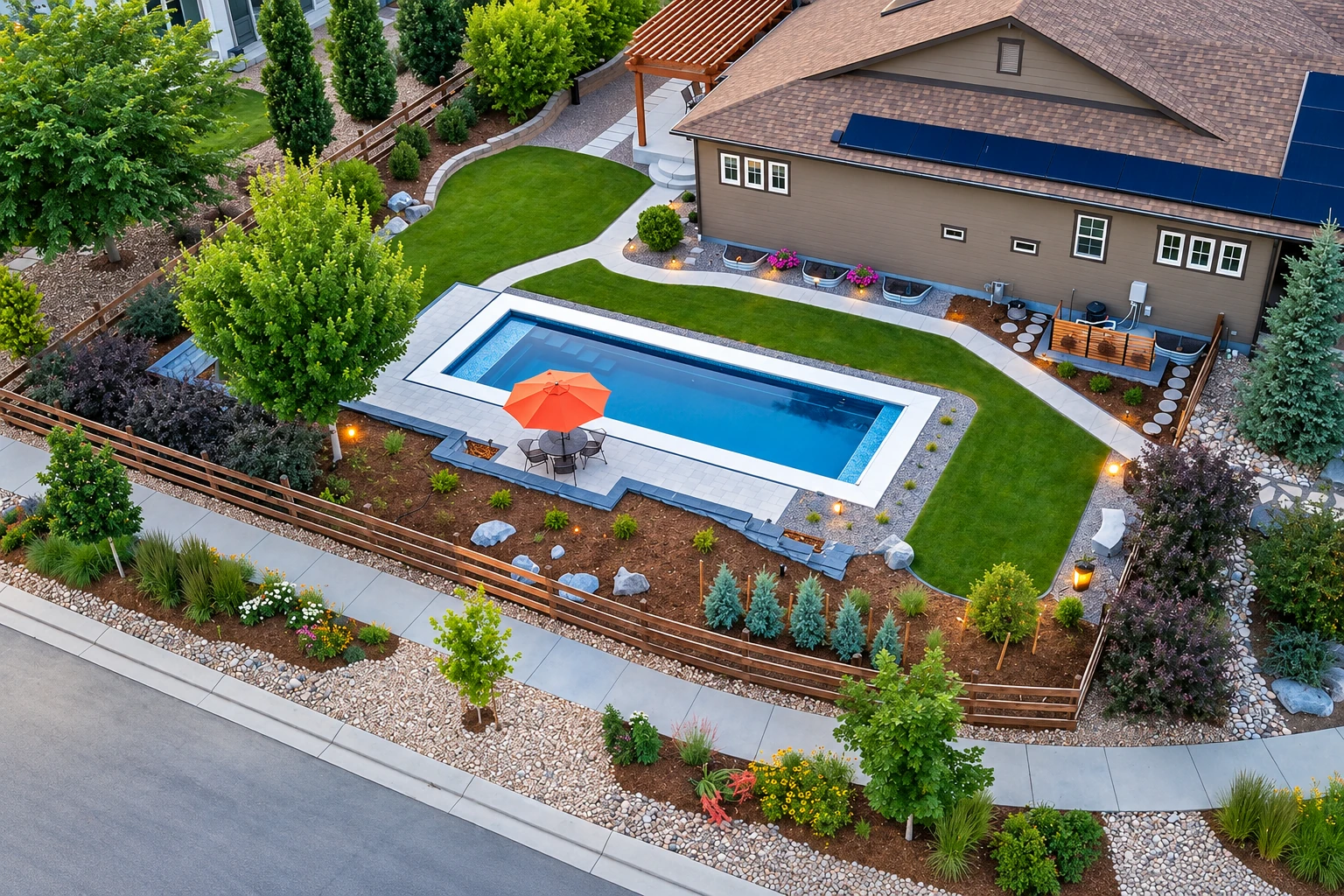
Baseline Murrieta Concrete builds driveways, patios, walkways, steps, retaining walls, footings and slabs for homes in Lakeland Village, CA. Most of it is flatwork, the flat concrete you walk, sit and park on, along with the walls and steps that make a sloped yard usable.
On our jobs in Lakeland Village, the lot decides more than the slab does. Homes here sit between the lake and the hills, near Lake Elsinore, so some yards are low and slow to dry while others climb toward the hillside. The calls we get most are for driveways that have sunk or cracked, patios that hold water, and steps or walls on yards that slope.
We come over from Murrieta the same way we do for jobs in Temescal Valley, with the same crew and the same prep. Before I put a number on paper, I walk the property, look at where the water goes now and measure the grade, because on these lots the slope and the ground under the slab tell me how much digging and base the job needs.
When an old driveway has sunk, cracked or holds water at the garage, we tear it out, dig to firm ground, pack a new base and pour a fresh slab.
A backyard patio here usually needs a slope that sends rain away from the house, so we set the forms for that slope before we order concrete.
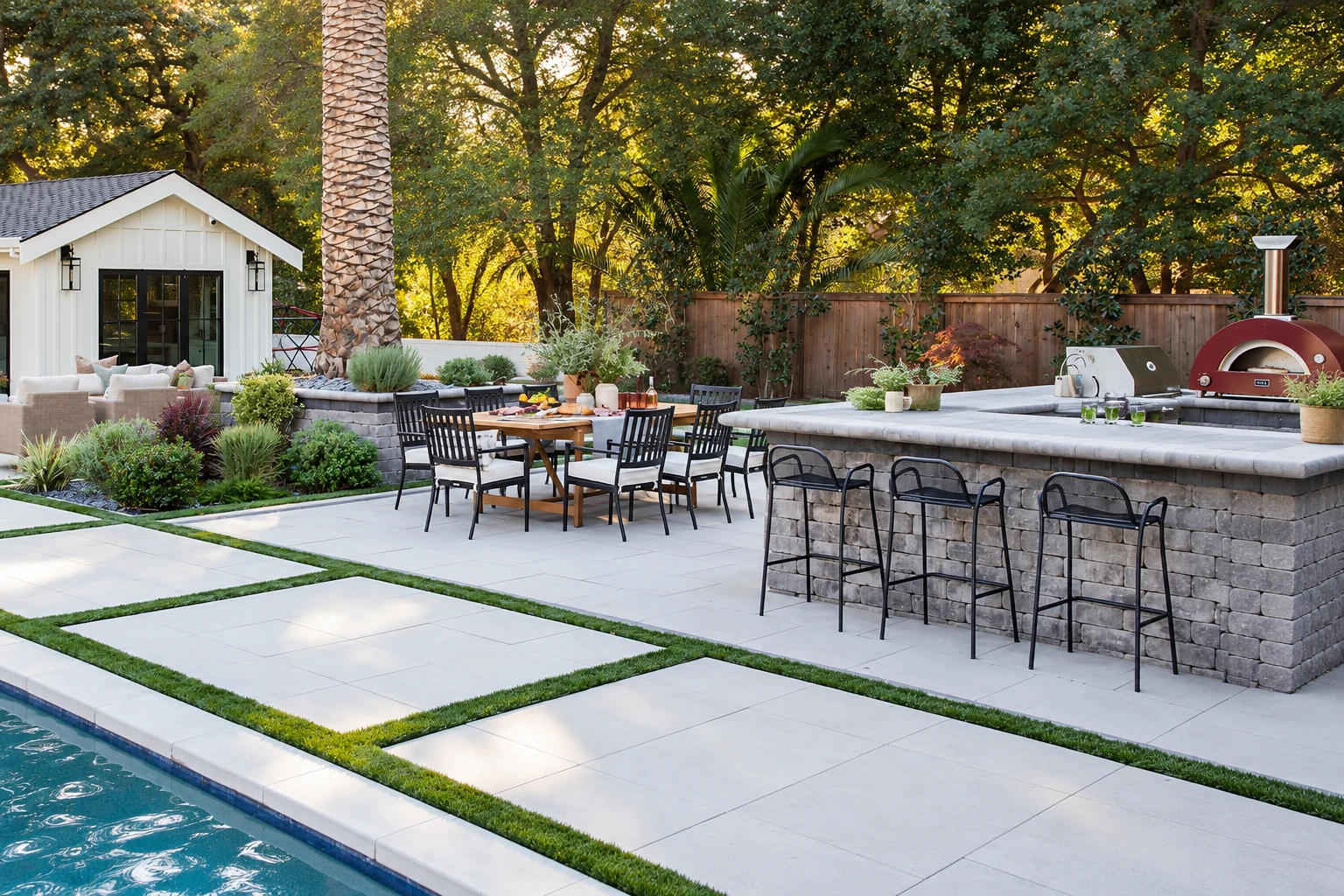
Stamped concrete gives a patio or walk the look of stone or brick in a single pour, with more labor and color than a plain slab.
Walkways from the driveway to the door, or around the side yard, get the same packed base as a driveway so they don't tip and trip people later.
If your garage slab is cracked, stained past saving or sloped the wrong way, we break it out and pour a new floor that drains toward the door.
Color, exposed stone and borders let a plain slab match the house, and the base underneath gets the same work whatever finish you pick on top.
On lots that climb toward the hills, a concrete retaining wall holds the soil back so you get a flat yard, with drainage behind it so water doesn't push it over.
For a shop, studio or room addition, we pour interior concrete floors flat and level over a packed base, with steel in the slab where the plans call for it.
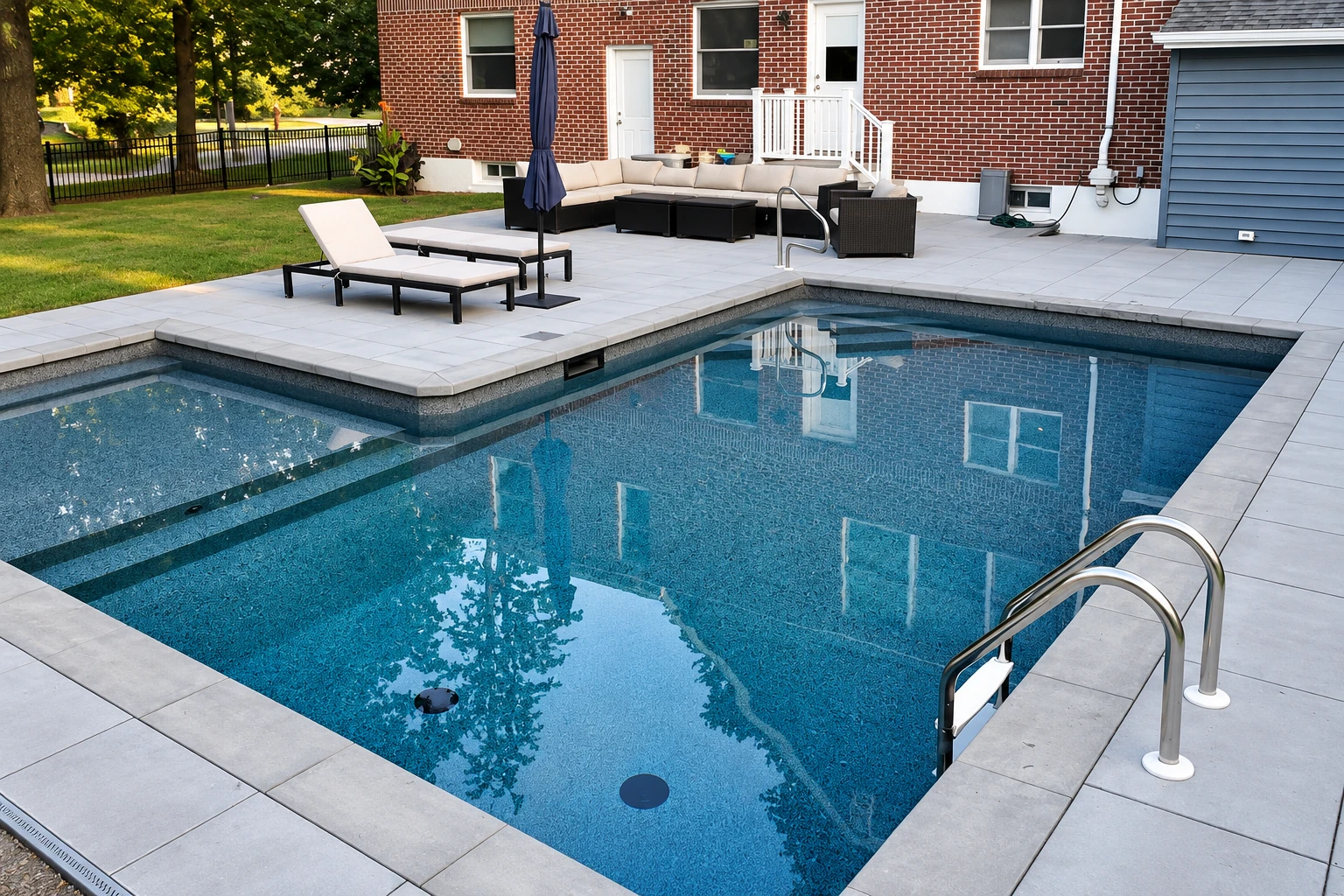
Around a pool, the deck has to shed splash water and stay grippy underfoot, so we slope it away from the pool and give it a textured finish.
Where the front door or back yard sits above the driveway, we form and pour concrete steps with even heights so nobody misses one in the dark.
A slab foundation for an addition, garage or accessory building starts with footings dug and checked, then a level slab with steel tied in before the pour.
For new construction or an addition, we lay out, form and pour the foundation the plans call for, and I check the forms myself before any concrete arrives.
Small property owners with a lot or shared parking area get thicker concrete and a planned slope, because cars turning and parking every day wear a thin slab fast.
Footings carry posts, walls, patio covers and additions, so we dig them down to firm soil, set the steel and pour them before anything goes on top.
When part of a slab or foundation has dropped, we find out why it settled before talking about raising it, because lifting it without fixing the cause rarely lasts.
We saw-cut concrete for clean openings, plumbing trenches, removing a damaged section or adding control joints, the cuts that tell a slab where to crack.
Send the form and we'll reply within one business day. Then I come out to your Lakeland Village property, measure the job myself and give you a written estimate, free and with no obligation.
(951) 477-4538Lakeland Village is an unincorporated community, outside any city's limits, so the County of Riverside is the local government and its Building and Safety Department is the permit office here. When a concrete job needs a permit, the schedule waits on that office, first for approval and then for the inspector, so a permitted driveway or wall takes longer to get started.
Before you hire anyone, ask whether they're licensed by the Contractors State License Board, the state board that licenses anyone who builds or alters a structure in California. When your job needs a permit, we handle the application with the county and meet the inspector on site, and if we aren't sure whether it needs one, we check with the county before we start.
Price here turns mostly on the lot. The size and thickness of the slab, how much old concrete comes out, how deep we dig for a firm base, any steel, the finish and how hard it is to get the truck in all move it. The schedule turns on any permit, the weather and the curing wait, and your own figure comes from the written estimate after I measure.
Most cracked, sinking slabs we tear out had a base that was raked level instead of dug out and packed, or joints that were cut late or never cut. I come out for the estimate and measure the job myself, our own crew does the work, and I check the forms before we pour, so the slope, thickness and base are right before the truck shows up.
The base is the part you never see after day one, which is why it's the first thing a tight budget tempts people to cut. If money has to come out somewhere, I'd rather you go with a plain broom finish over a solid base than a fancy finish over a weak one, because no surface can hold itself up over dirt that settles.
I started Baseline Murrieta Concrete in 2020 after learning the trade on other people's crews, and before that I was patching barn floors and setting posts on the family farm. We're licensed and insured. Your satisfaction, guaranteed. If you want a straight answer about your slab, call (951) 477-4538 or send us the form.
On a Lakeland Village job, the lot shapes the work more than the slab size does. These are the four things we look at on the ground here before we price or pour.
Lots east of Grand Avenue generally run down to the lake edge, and on low ground like that the soil under a slab can stay wet longer. We dig past soft dirt to a firm subgrade, the ground the slab sits on, and pack the base in layers, because a slab only stays flat as long as what's under it does.
West of Grand Avenue, lots reach back to the base of the hills and can include steep slopes, so driveways there often climb. We give a sloped driveway a broom finish, the light texture dragged across the wet surface, so tires and shoes grip it, and we add rebar, the steel bars inside the slab that keep a crack from opening up.
On a tight or steep lot, the truck can't always back up to where we're pouring. Then we pump the concrete or wheel it in, which adds labor and equipment to the job. It's one of the things I check when I measure, so it shows up on the estimate instead of as a surprise on pour day.
Riverside County gets hot, dry Santa Ana winds every year, and wind and heat pull water out of fresh concrete too fast. That's how a slab ends up with a weak, dusty top. We pour early in the day and keep the surface damp while it cures, the slow hardening that gives concrete its strength, and on a bad wind day I'd rather move the pour.
It can, so we don't assume it doesn't. The county's older list of the most common projects that need no permit is mostly finish work like painting, tiling, flooring and counter tops, and even exempt work still has to meet the code. If we aren't sure about your job, we check with the county before we start.
A contractor needs a California license when the job needs a building permit, uses any additional workers, or totals $1,000 or more in labor and materials. Most driveways, patios and walls cross that line, so ask any contractor for their license before you sign anything.
It could, especially on the lake side, where lots may be part of a Special Flood Hazard Area. A FEMA notice places a local project area in Zones A and D, and Zone A has a 1 percent chance of flooding every year. When I measure, I check where your water runs and we set the slab to drain away from the house.
Your price comes from the slab's size and thickness, how much old concrete we haul off, how deep we dig for a firm base, any steel and the finish. A plain broom finish costs less than stamped or colored concrete, and a steep or tight lot where we have to pump costs more. I measure and write it all down before you decide.
You can walk on a new driveway well before you can drive on it, because concrete keeps gaining strength for days while it cures. Heat and wind change that pace, so we tell you when it's ready for your feet and your car based on the pour and that week's weather. Until then, keep cars and heavy loads off it.
Move cars, planters and anything stored along the work area, and keep pets and kids clear on pour day. Tell us about any sprinkler lines, drain pipes or wiring you know of near the slab, because we dig down for the base and I'd rather know than guess. Leave the truck a clear path to the street too.
You can reach us at (951) 477-4538 any day from 8 AM to 9 PM, so describe the job and ask about permits when it suits you, or use our form if that's easier.