Concrete driveway building
When a builder-grade driveway has cracked, sunk at the garage or holds water, we tear it out, dig to firm ground, pack a new base and pour it fresh.
Baseline Murrieta Concrete is a concrete contractor based in Murrieta that pours driveways, patios, walkways, steps and foundations for Temecula homeowners. Our own crew does the work, and I measure every job myself.
Baseline Murrieta Concrete pours and replaces driveways, patios, walkways, steps, pool decks, garage floors, retaining walls and foundations for Temecula homes. We're a concrete contractor in Murrieta, CA, right next door, so Temecula jobs get the same crew, the same base prep and me measuring each one in person.
A lot of what we see in Temecula is tract homes where the builder's driveway or back patio has cracked across the middle, dropped at a joint or started holding water by the garage. The cause is usually underneath, a base that was raked flat instead of dug out and packed. We dig down to firm subgrade, the soil the slab rests on, and pack new base before any forms go up.
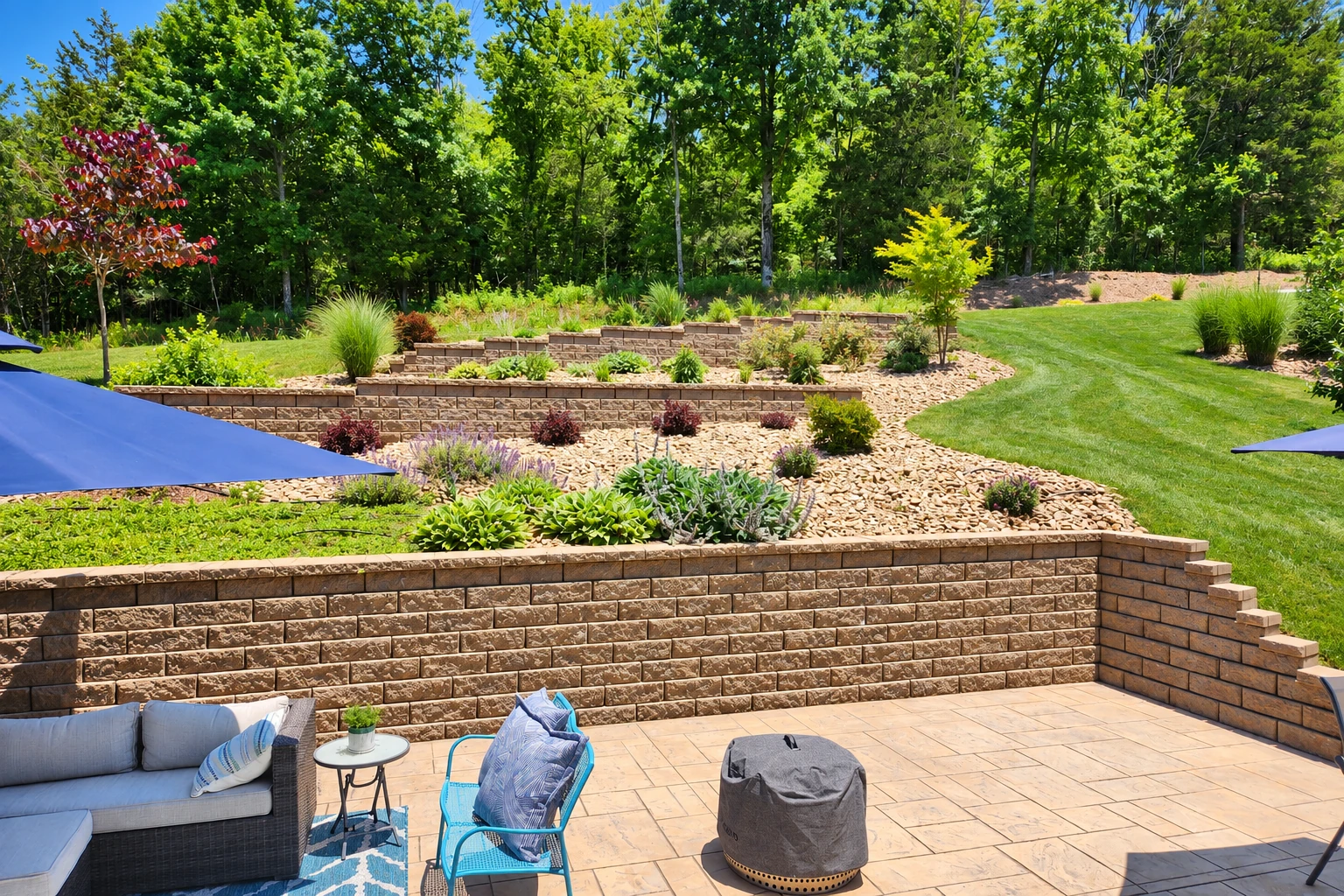
Custom homes on bigger lots bring longer driveways, slopes that need a retaining wall or steps, and pool decks that have to shed splash water. On flatwork, the flat slabs like driveways, patios and walks, we check where the water runs before we set forms so the finished slab falls away from your house. We see the same mix of homes in Murrieta and French Valley, so these problems are familiar to our crew.
When a builder-grade driveway has cracked, sunk at the garage or holds water, we tear it out, dig to firm ground, pack a new base and pour it fresh.
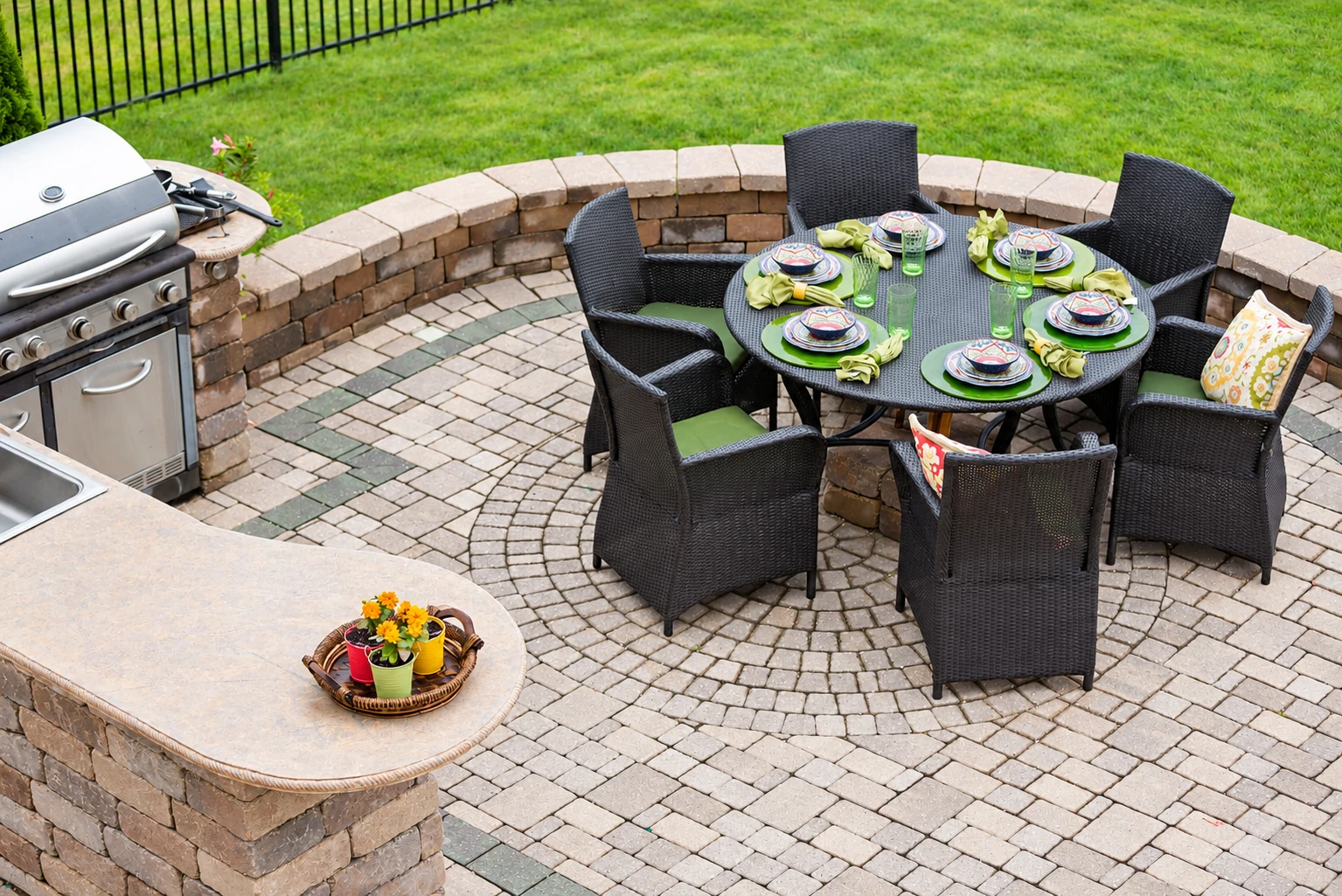
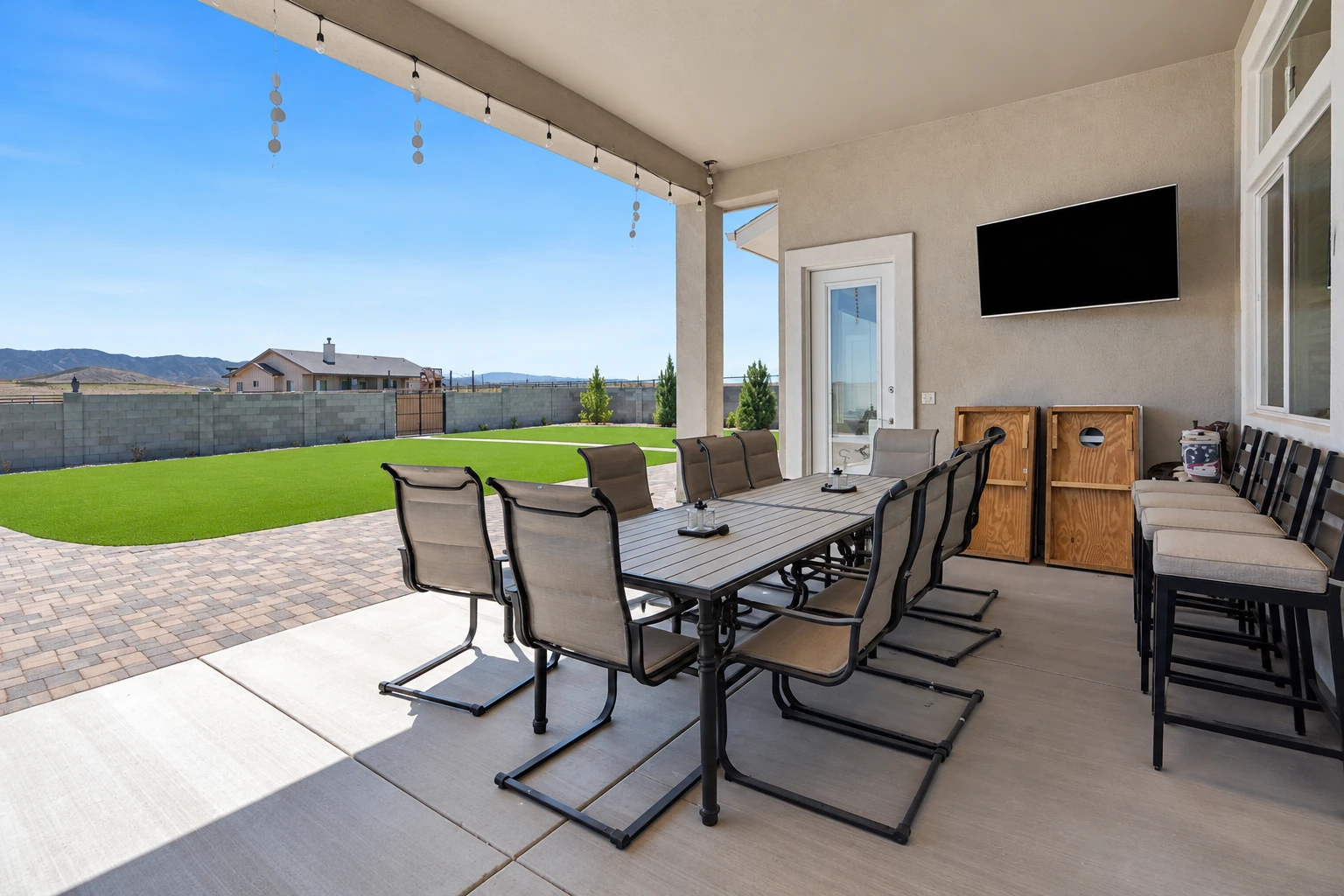
For a backyard that's still bare dirt or has only a small builder pad, we pour a bigger patio sloped to carry water away from the back door.
Stamped concrete presses a stone, brick or wood pattern into the surface while it's still soft, which suits patios and front entries where you want a finished look.
A front walk or side-yard path that has heaved or settled into a trip edge gets replaced with a new run on a packed base.
When a garage slab is cracked, stained or uneven, we break out the bad section or the whole floor and pour a level one that drains toward the door.
Color, exposed aggregate and scored patterns change how a slab looks without changing how it's built, so a plain entry or patio can match the house.
On a sloped lot, a concrete retaining wall holds the soil back so you can level part of the yard, widen a driveway or stop a bank from creeping.
Interior slabs for additions, workshops and casitas get a packed base, a moisture barrier and steel set to the plans before we pour.
Around a pool, the deck needs a surface that isn't slick when wet and a slope that sends splash water to the drains instead of the house.
Front or back steps that have cracked or pulled away from the house get rebuilt with even risers, so nobody catches a toe on a tall one.
For a new home, addition or accessory building, we form and pour the slab foundation to the approved plans, with the steel checked before any concrete goes in.
When a building needs footings and stem walls instead of a single slab, often on a slope, we dig, form and place the steel to the drawings.
Small property owners call us for parking areas and lot sections, poured heavier where trucks turn and pitched so rain doesn't sit in low spots.
Patio covers, block walls, pergolas and additions all start with footings, the concrete pads that carry the weight, dug to the depth the plans call for.
If part of a slab or foundation has dropped, we work out why it moved first, then lift and support it so the fix has solid ground under it.
We saw-cut concrete for new doorways, plumbing trenches or pulling out one bad section, so you don't have to tear out a whole slab to fix part of it.
Send the form and we'll reply within one business day to set a time to come out. I'll visit your Temecula property, measure the job myself and give you a written estimate, free and with no obligation.
(951) 477-4538Inside Temecula city limits, a building permit is the city's call. The city's Building Department handles plan check, permits and inspections, and work that touches grading or the public right of way goes through the Land Development Division. On a permitted job, plan review and inspection dates set part of the schedule, so I check with the city early whenever I'm not sure a job needs one.
Before you hire anyone here, ask for their California contractor's license and their Temecula business license, and expect both to be current. When your job needs a permit, we handle the application with the city and meet the inspector on site, so the paperwork and the visit don't land on you.
What moves the price is the same as in Lake Elsinore or Menifee: how much old concrete comes out, how deep we dig for base, the slab's size and thickness, the steel, truck access and the finish. A broom finish, the light brushed texture that gives shoes and tires grip, costs less than color or stamping. The schedule turns on permits, inspections, weather and curing, the time new concrete needs to gain strength.
I started Baseline Murrieta Concrete in 2020 after learning the trade on other people's crews, and before that I was patching barn floors on my family's farm. I come out for every estimate and measure the job myself, because concrete is hard to undo once it sets and I'd rather check a number than guess at it. Our own crew does the work, and I check the forms before we pour.
If the budget has to give somewhere, don't let it be the base. Nobody sees a dug-out, packed base on pour day, so it's the first thing a tight bid trims, but it's what keeps a slab from settling later, and a nice finish on soft ground still cracks. We're licensed and insured. Your satisfaction, guaranteed. Call (951) 477-4538 or use the contact form to tell me what you're seeing at your Temecula house.
A few things the city publishes change how we plan concrete work here, from which office reviews the job to how we slope a slab and when we're allowed to pour.
The city's building page asks applicants to confirm the property is within the City of Temecula, and we settle that question at the estimate too. A property outside the limits answers to the county instead of the city, and some addresses near the edges can land on either side. Knowing which office has the job keeps the paperwork from starting in the wrong place.
Temecula's published design criteria include rainfall of 3 inches per hour. That's a figure buildings are planned around, not a weather report, but it tells you water needs a clear path off your property. On driveways and patios we check where runoff goes before we set forms, then pitch the slab away from your house so a hard storm drains off instead of pooling against the wall.
The city lists Seismic Zone 4 among its design criteria for structures. That matters most on foundations, footings and taller retaining walls, where the approved plans set the size of the footing and the steel inside it. We build to those plans, and I check the steel and forms against them before the truck shows up, because there's no adding rebar once the concrete is in.
On a permitted job, the work has to stay exposed until a city building inspector approves it. For concrete, that usually means the trenches, forms and steel sit ready and uncovered until the visit, and we don't pour before the sign-off. We plan the pour around that inspection, which is one reason part of a permitted job's schedule depends on the city.
Your price comes from a free written estimate after I measure on site, because tear-out, base depth, slab size and finish change from one Temecula driveway to the next. The choices that usually move it most are how much old concrete has to go and whether you want a plain or decorative finish. Cutting base prep to save money is the one trim I'll talk you out of.
You can usually walk on new concrete well before you can drive on it, because the slab keeps gaining strength for days while it cures. I'll tell you the walking and driving dates for your mix and the weather before we pour, so you can plan where to park. Tear-out and base work come first, and on a permitted job the inspection comes before the pour.
Concrete can still crack, but a packed base and well-placed control joints decide where and how much. Control joints are grooves we cut on purpose so the slab cracks there, in a straight line, instead of across the middle. We cut them on time, and we add rebar, the steel that holds the pieces together if a crack opens, where the job calls for it.
The property owner is responsible for making sure every required inspection happens, though the contractor may schedule them and be on site. The city also wants the permit, approved plans and job card on site for each one, as its inspections page explains. On our permitted jobs we meet the inspector and keep those papers there, but it's worth knowing the responsibility is yours.
Yes. The city requires a business license of anyone doing business within Temecula city limits, and contractors based outside the city apply on their own form. Every Temecula business license expires January 31, so when you check a contractor, make sure theirs is current. The city's business license instructions lay out the details.
A state license applies when the project needs a building permit, uses any additional workers, or the labor and materials on one or more contracts total $1,000 or more. The Contractors State License Board says no license is needed only when every condition holds, including no permit, no employees, no advertising as licensed and a total under $1,000. Ask for the license before you sign.
Move cars, pots and furniture out of the area, and tell us where sprinkler lines, valves and any buried wires run, because we dig down for the base and don't want to cut them. Point out where water pools in a storm, too. On pour day, keep kids and pets off the wet concrete until the crew says it's set.
Give the address when you call (951) 477-4538 or fill out the form, so I can confirm which office covers your property before I come out.