Concrete driveway building
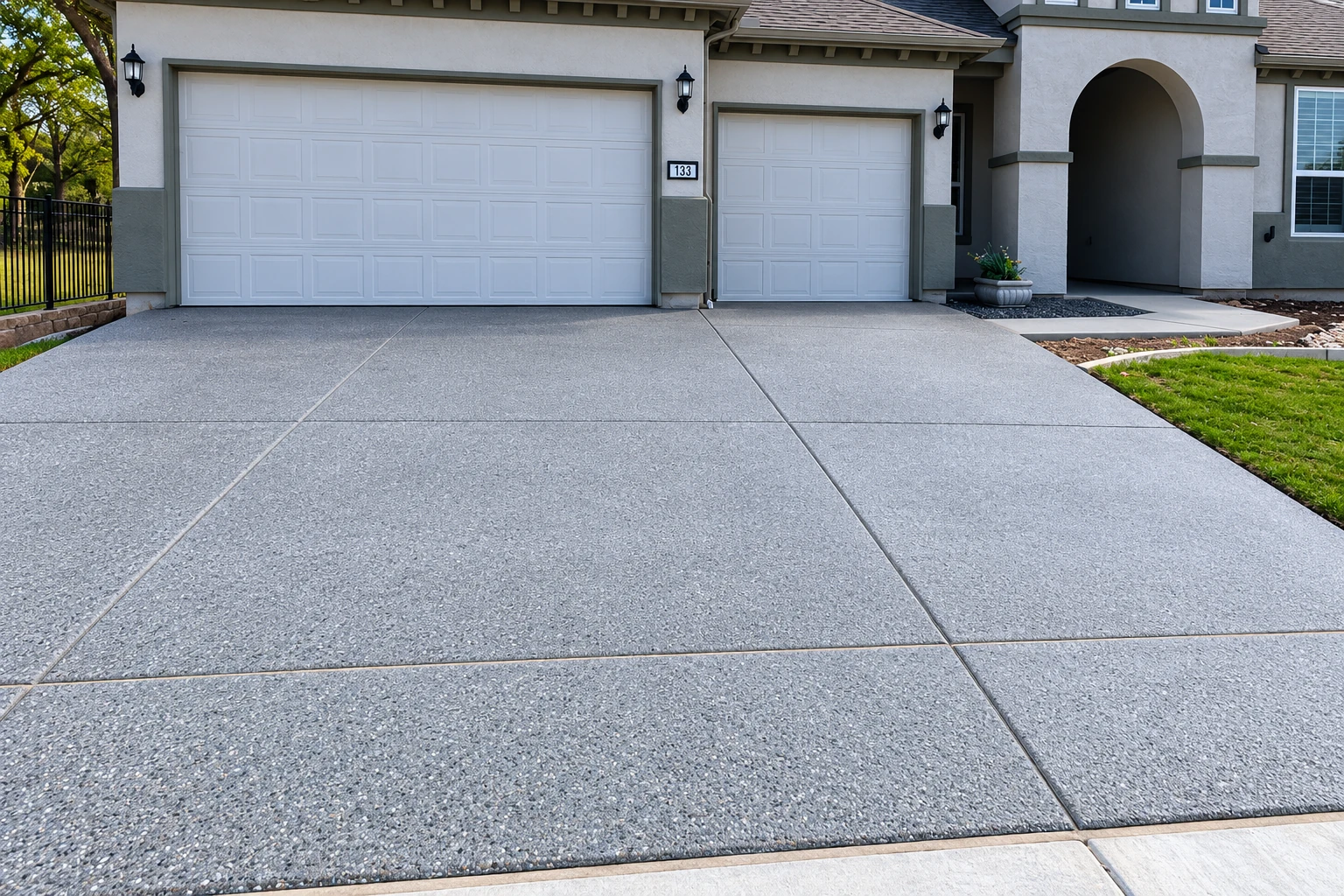
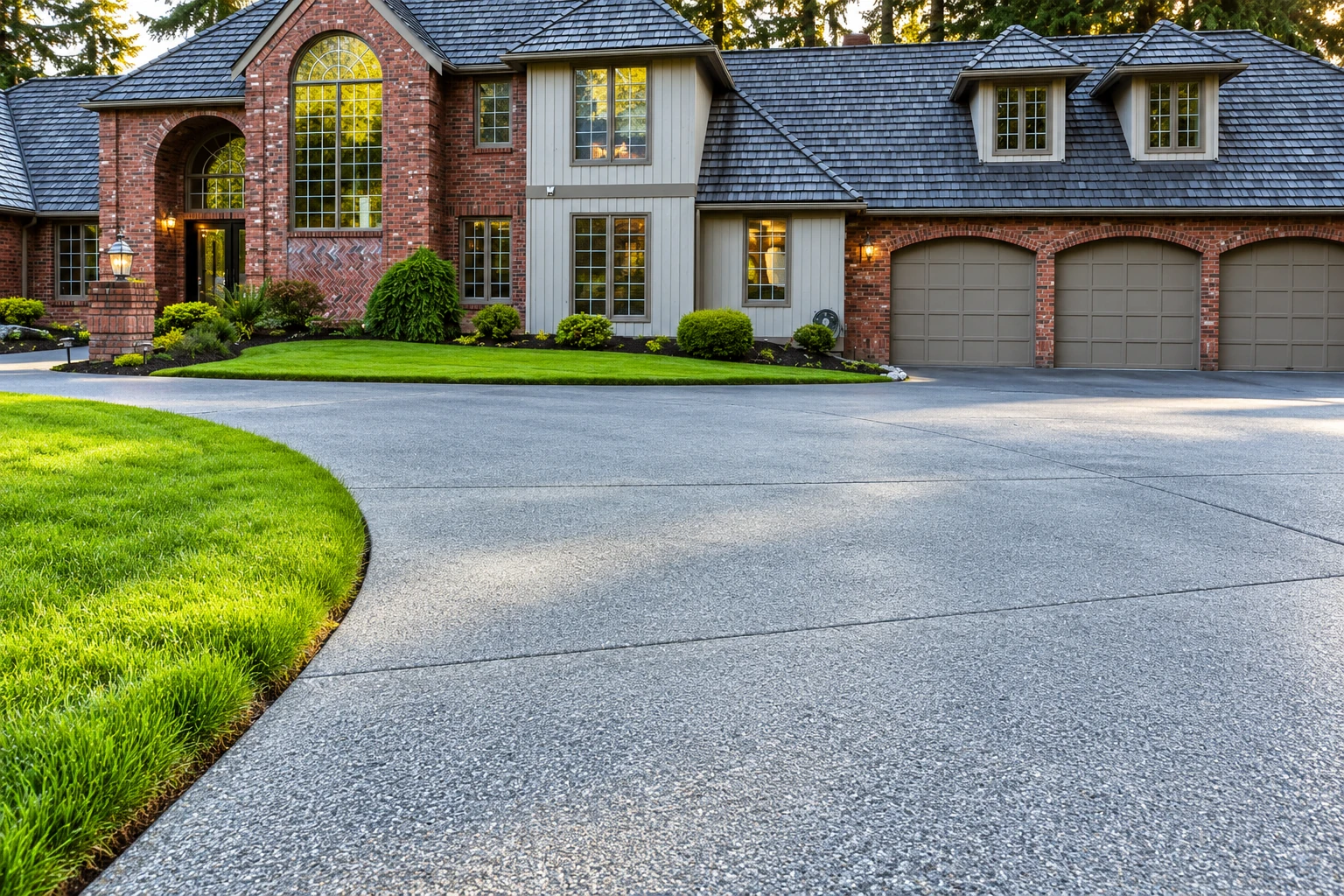
If your driveway has cracked across, sunk near the garage or holds water, we break it out, dig to firm ground, pack a new base and pour fresh.
Baseline Murrieta Concrete builds and replaces driveways, patios, walkways, steps, pool decks and retaining walls for homes in Canyon Lake, CA. Our own crew comes over from Murrieta and does the work through cleanup.
Baseline Murrieta Concrete pours flatwork in Canyon Lake. That's the flat slabs, like driveways, patios, walkways, garage floors and pool decks. We also build steps, retaining walls, footings and foundations. We come over from Murrieta, and I measure every job myself before our crew sets a single form.
Most people here live around the lake, and a local real estate site describes Canyon Lake as a private gated community open to property owners and their guests. Our calls here are usually about outdoor space. People want a bigger back patio, a fix for a pool deck that's chipping, or a new driveway to replace one that's cracked and settling. We do the same work for homeowners in Lake Elsinore and Menifee.
When an old slab has sunk or broken up, the trouble usually started underneath. Often the subgrade, the soil the slab sits on, was raked level instead of dug out and packed, so the concrete settled along with the dirt. Other times nobody checked where the water runs, and the slab ended up sloping toward the house. We dig to firm ground, pack it down and set the slope before any concrete arrives.
If your driveway has cracked across, sunk near the garage or holds water, we break it out, dig to firm ground, pack a new base and pour fresh.
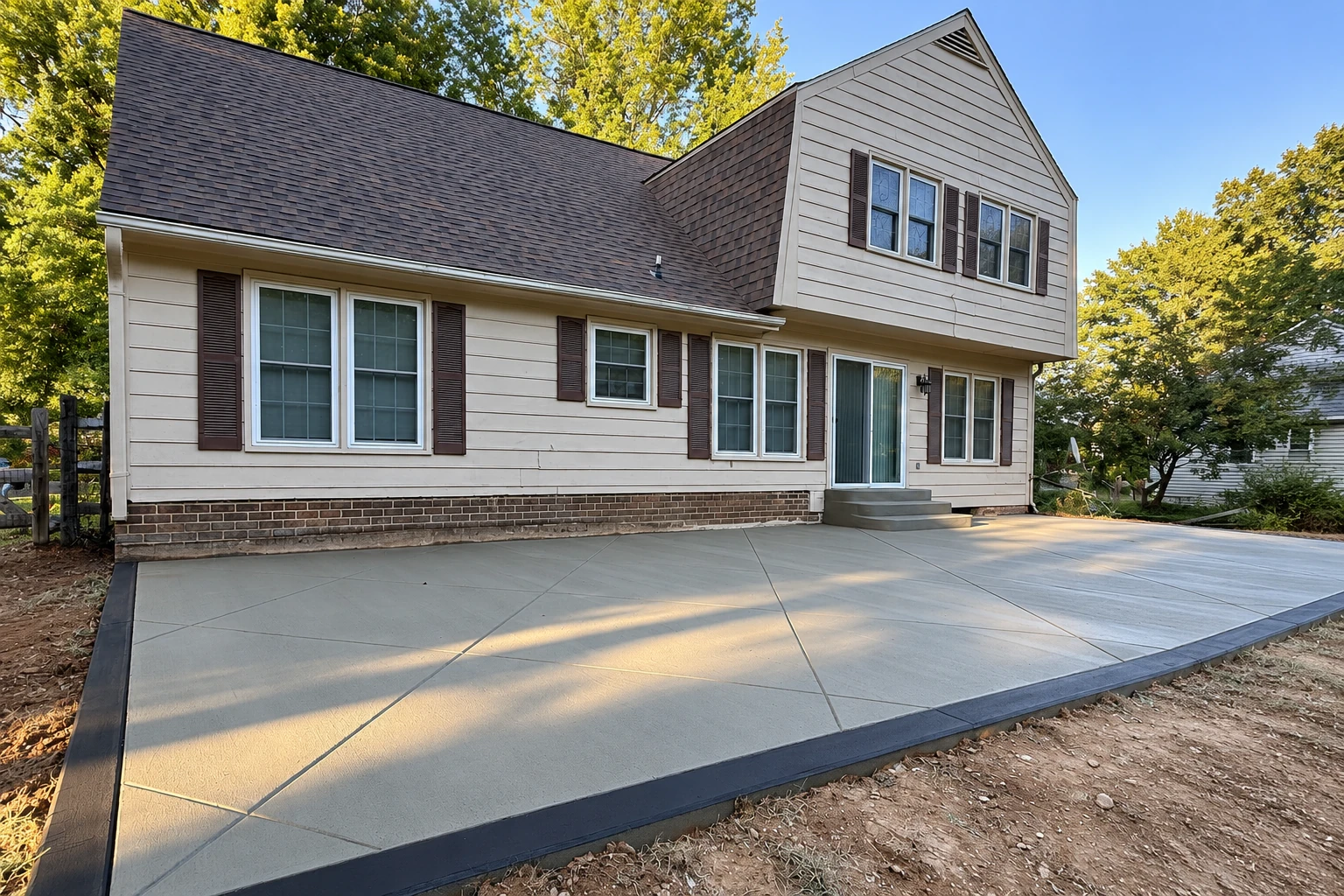
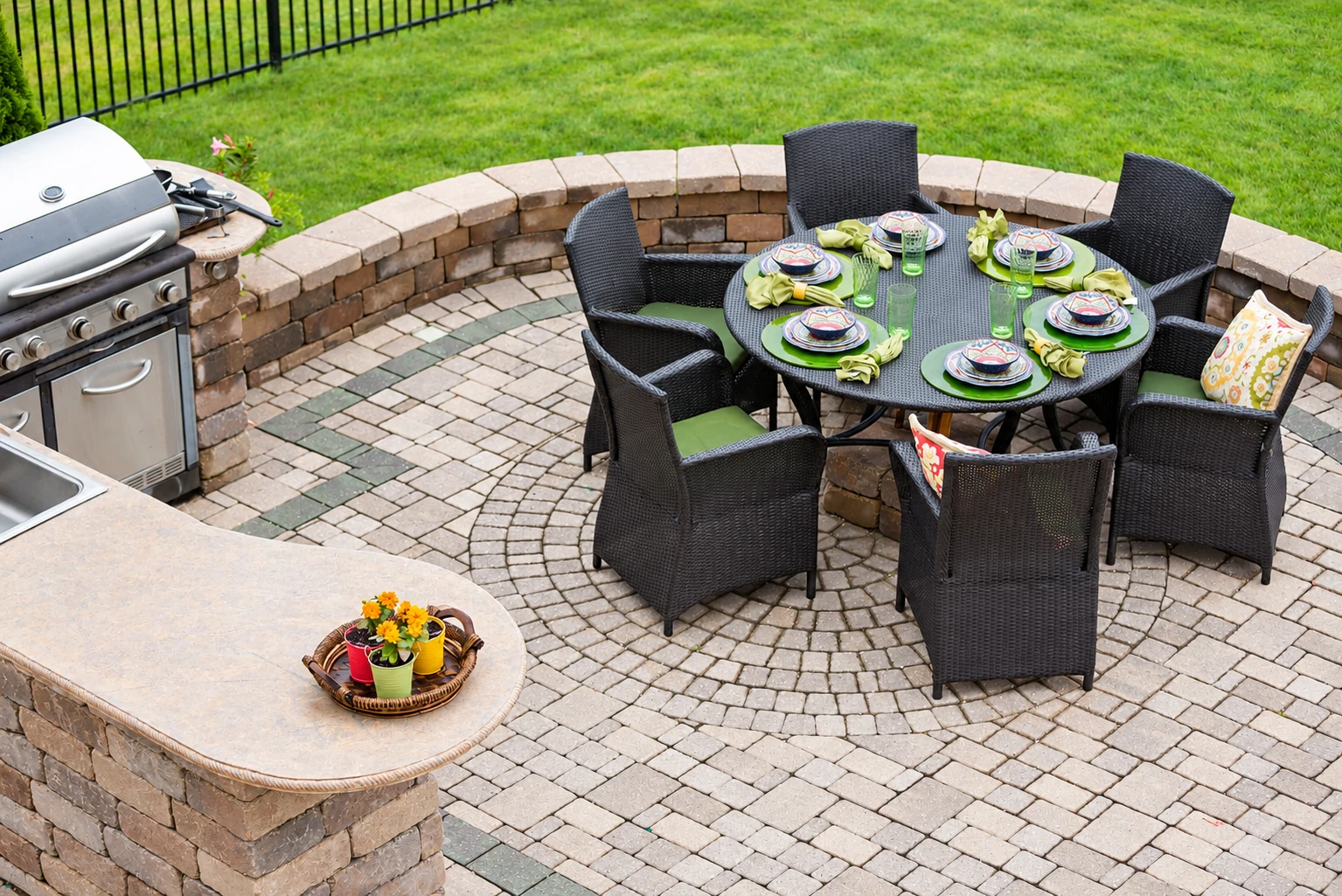
A back patio that's chipping, tilting toward the house or too small for the table gets rebuilt, sloped so rinse water runs away from your walls.
Stamped concrete presses a stone, slate or plank pattern into the wet surface. It suits patios and entries where you want that look without laying stone.
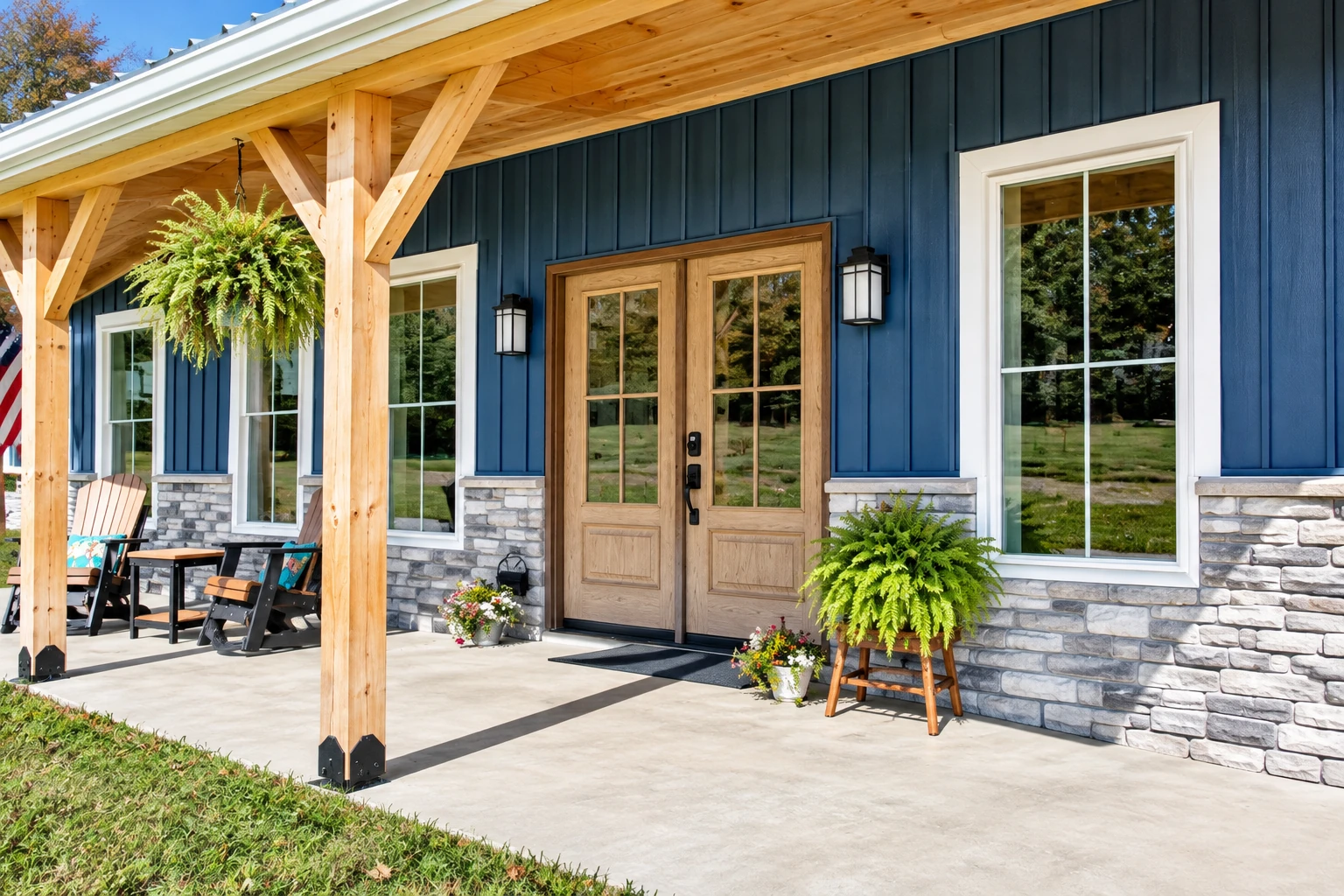
Front and side walkways that have heaved or crumbled get replaced with a straight, even path, pitched just enough that water doesn't sit where you walk.
A garage floor that's cracked, stained or dusting on top can be replaced with a new slab on a packed base, ready to park on once it's cured.
Color, exposed stone and borders for a patio or entry when plain gray doesn't suit the house. We settle the look together at the estimate, before anything gets mixed.
Where the yard steps down or soil is creeping onto a patio, a poured wall with steel and a footing holds the grade and lets water drain behind it.
Interior slabs for a workshop, storage room or addition, poured level and finished smooth so the flooring that goes on top lies flat.
Pool decks take sun all day, so we give them a textured top for bare feet and slope them away from the pool and the house.
Steps that rock, crumble at the edges or have uneven rises get rebuilt with even heights, so nobody catches a toe coming in at night.
A slab foundation for an addition, casita, garage or large shed. We grade, compact and reinforce the ground before we pour.
Foundations for new structures on your lot, laid out against the plans. I check the forms myself before any concrete goes in.
Parking areas for small property owners, built to carry daily car traffic and drained so water doesn't pond in the stalls after a rain.
Footings for patio covers, walls, posts and additions, dug to the depth the plans call for so whatever sits on top stays put.
If part of a slab or the house has settled and doors stick or floors slope, we find out why it moved before we talk about lifting it.
Cutting openings, trenches for drain or utility lines, and clean edges where old concrete meets new, so the removal stops exactly where it should.
Send the form and we'll reply within one business day to set up a visit. I'll come out to your Canyon Lake property, measure the job myself and give you a written estimate. It's free, and there's no obligation.
(951) 477-4538Canyon Lake's Building and Safety Department reviews plans, issues building permits and inspects the work for code compliance. If your project needs a permit, the start date waits on that review, so we plan the pour around it instead of pouring first. Applications start with an appointment at the building official's counter, which is open 8 to 9 a.m. and 1 to 4 p.m.
When a job needs a permit, we handle the application with the city and meet the inspector on site. If we aren't sure whether yours needs one, we check with Building and Safety before we start, which is how we work in Good Hope and everywhere else too. You can also check two things about any contractor here, a California contractor license and the city's business license. The questions below cover both.
Price comes down to the size and thickness of the slab, how much old concrete comes out, how deep we dig to reach firm ground, the finish you choose and how easily our equipment can reach the spot. The schedule depends on the permit, the weather and curing, which is the wait while concrete hardens before you use it. Your written estimate spells out both for your job.
I come out for the estimate and measure the job myself. Our own crew does the work, and I check the forms before we pour. I first mixed concrete on a family farm patching barn floors, learned the trade on other people's crews, and started Baseline Murrieta Concrete in 2020. Concrete is hard to undo once it sets, so I'd rather measure twice and explain why than leave you guessing.
The base is where I won't cut corners. On pour day nobody sees the packed ground under the slab, so it's the first thing that gets trimmed when a budget runs tight, and a slab on loose dirt settles with that dirt. If money is tight, I'd rather you pick a plain broom finish, the light texture that keeps feet from slipping, and keep the base right.
We're licensed and insured, and the work is clean and straight, with edges that line up and slopes that carry water away. Your satisfaction, guaranteed. Call (951) 477-4538 or send the form and I'll come take a look.
The city's own building code text describes high heat, long dry stretches, strong winds and active faults nearby. Here's what each one means for a slab at your house.
The city's code text notes high temperatures in this part of the county. Concrete poured in midday heat can dry on top before it sets underneath, and that leaves a weak, dusty surface that chips later. On hot days we start early, keep the material moving and plan the finishing so the crew isn't racing the sun. If the forecast turns too hot, we'd rather move the pour.
The same text describes extended periods with little to no rain. Bone-dry ground pulls water out of fresh concrete from below, so we dampen the packed base just before the pour. Curing matters more here too, because a slab that holds some moisture in its first days hardens stronger. We'll tell you how to keep yours damp and when to leave it alone.
The city also cites high winds. Wind dries a fresh surface fast and blows dust and leaves into it, so we watch the forecast in the days before a pour and keep coverings on hand. A windy morning can push a pour back a day, and that's better than a slab with a crusted top that flakes in its first summer.
The code text places Canyon Lake in an area of substantial seismic activity, with the San Andreas, San Jacinto and Elsinore faults nearby. That's one more reason we don't skip rebar, the steel bars inside the concrete, in walls, steps and footings. Steel won't stop concrete from cracking, but it holds the pieces together so they don't shift apart.
Your price depends on the driveway's size and thickness, how much old concrete we break out and haul away, and the finish you pick. A plain broom finish costs less than stamped or colored concrete, and tearing out a cracked driveway adds to the cost of the new pour. I measure on site, so the figure you get is for your driveway, not an average.
Yes. The city says a contractor or subcontractor doing business in Canyon Lake on any job needs a valid city business license. The license covers the calendar year, January 1 through December 31, so ask any contractor you're considering whether theirs is current for this year.
The Contractors State License Board requires a license when the job needs a building permit, uses any additional workers, or costs $1,000 or more in labor and materials. The board also says a bigger project can't be split into pieces under $1,000 to get around that rule. Ask any contractor for their state license before you sign.
According to the city's ordinance text, building permit applications deemed complete on or after January 1, 2026, follow the 2025 California Building Standards Code, the state's set of building rules, as Canyon Lake adopted and amended it. If your job needs a permit and gets filed now, that's the code your plans and inspection go by, and it's the one we build to.
You can usually walk on new concrete well before you can drive on it, because the slab keeps gaining strength for weeks as it cures. The wait also depends on the weather and the mix, so we'll tell you the walk-on and drive-on days for your slab before we pour, and you can plan where to park.
Move cars, patio furniture, pots and anything stored along the side of the house out of the work area, and keep pets inside on pour day. Tell us about sprinkler lines, pool equipment or wiring near the slab, since we dig down to firm ground and would rather know where they are before we start.
Most concrete gets some hairline cracks, but a slab on a packed base usually stays level and cracks only where we planned. We cut control joints, shallow grooves that give the slab a place to crack in a straight line, while the concrete is still fresh. If they're cut late or left out, the cracks wander wherever they like.
Call (951) 477-4538 any day of the week from 8 AM to 9 PM, so you can reach us after work or on a weekend, or send the form and tell us what you're seeing.