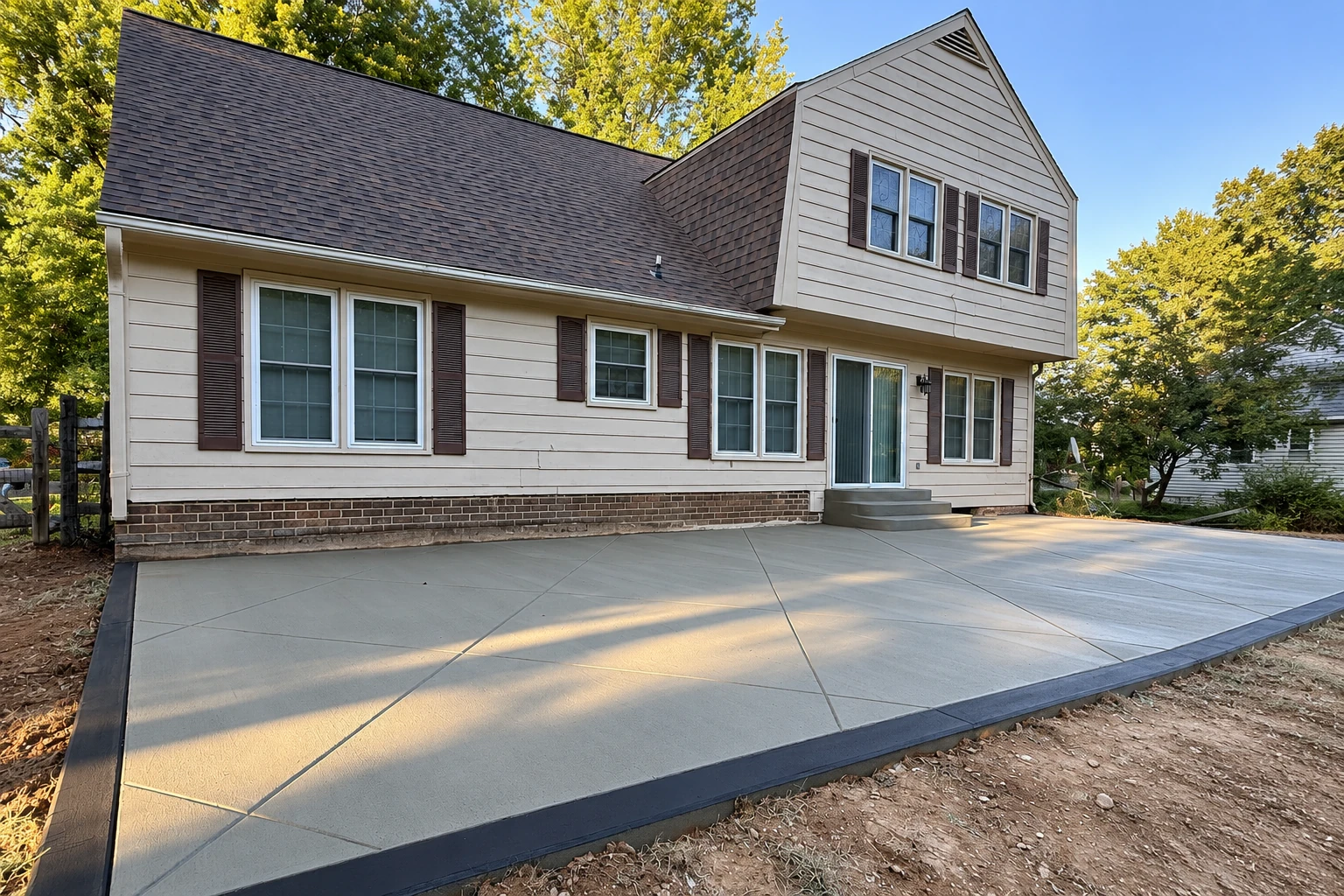
Concrete driveway building
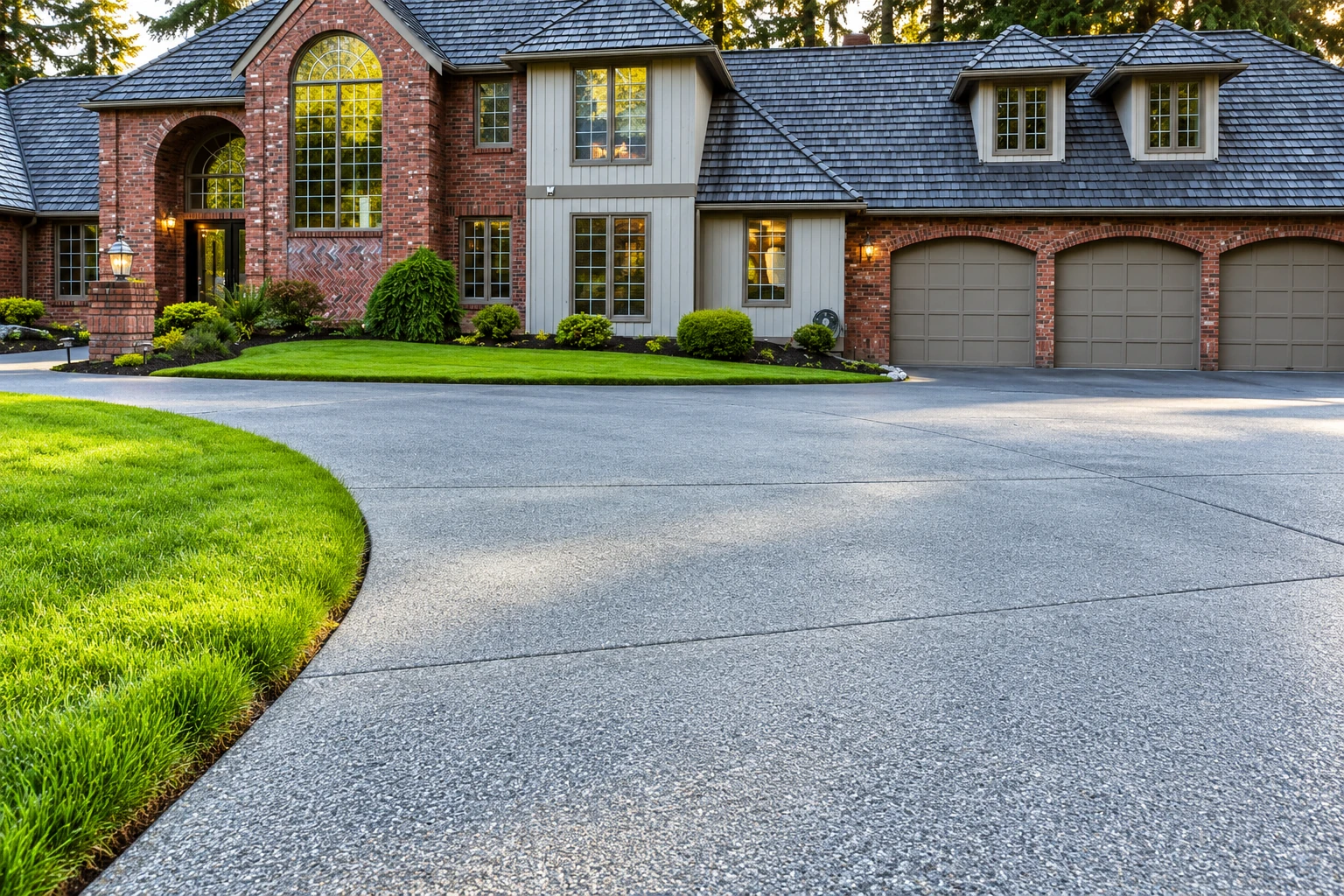
Long drives that climb a hill need a dug-out, packed base and a slope that sheds water to the side, so we set grades before forming the slab.
Baseline Murrieta Concrete is a concrete contractor based in Murrieta, CA, and we pour driveways, patios, walkways, pool decks, footings and slabs for homes and small properties in Fallbrook, CA, including hillside and grove lots.
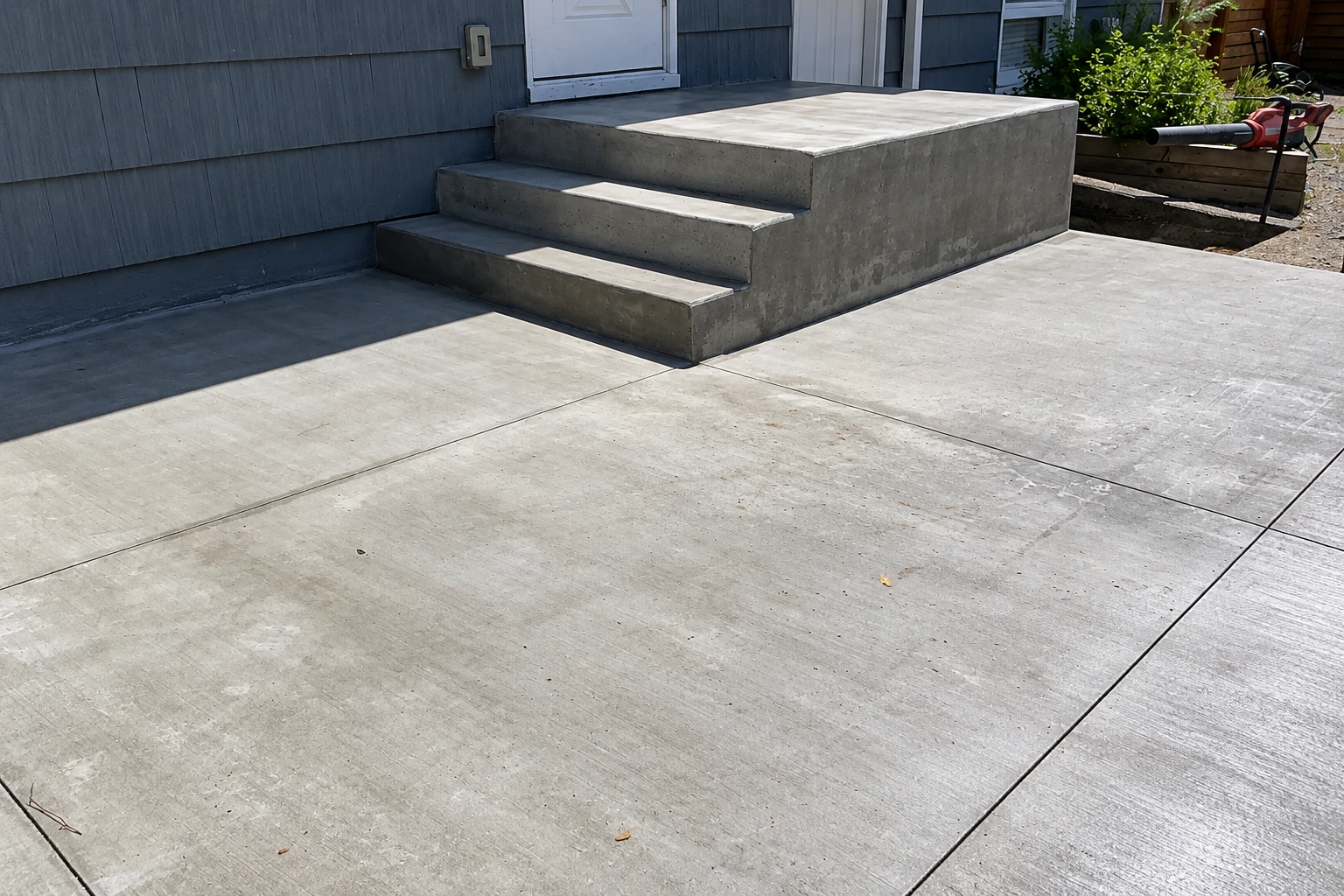
Baseline Murrieta Concrete builds driveways, patios, walkways, steps, retaining walls, pool decks, garage floors and footings for homes in Fallbrook, CA. Most of the land here rolls, so a lot of our work in Fallbrook starts with getting the ground under the slab right and making sure water runs away from the house.
Fallbrook is rolling hill country, with avocado and citrus groves, vineyards and horse properties spread between the houses. A driveway climbing a slope needs its subgrade, the ground the slab sits on, dug out and packed so it doesn't slide or settle with the dirt. A patio cut into a hillside needs its drainage worked out before we set a form, because water coming downhill finds the low side of a slab.
Bigger lots also bring longer runs of concrete, slabs for barns and workshops, and footings for fences, gates and shade structures. Closer to the house, the calls look like the ones we get in Temecula and Murrieta: cracked driveways, sinking walkways, chipped steps and patios that hold water after it rains.
Long drives that climb a hill need a dug-out, packed base and a slope that sheds water to the side, so we set grades before forming the slab.
A patio behind a hillside house works best when it falls away from the walls, so rain heads into the yard instead of toward your foundation.
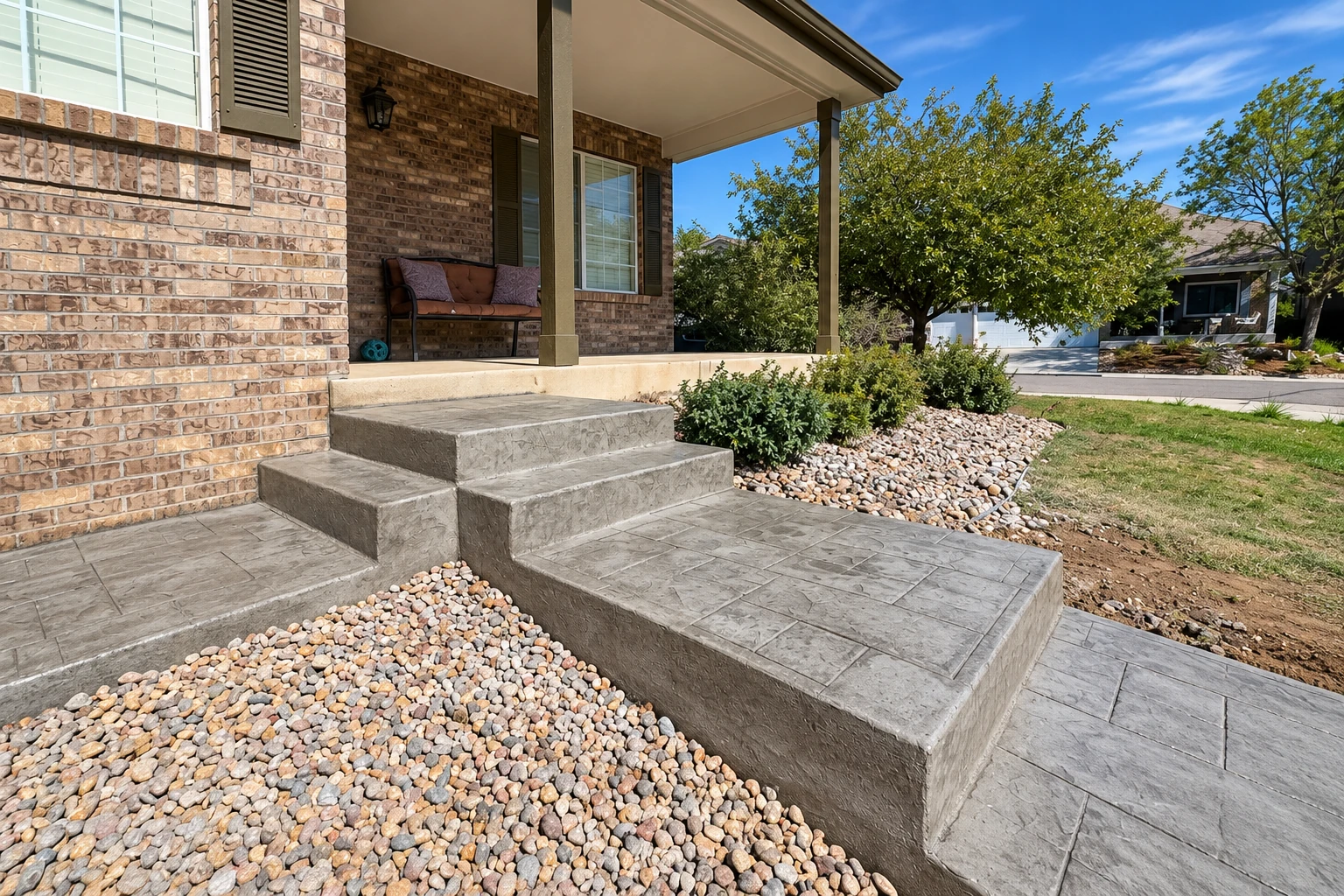
Stamped concrete suits a patio or entry where you want the look of stone or tile on a single slab, with the same base work underneath as plain concrete.
Walkways between the house, the drive and outbuildings help when dirt paths turn to mud, and we cut control joints, planned grooves that give cracks a straight place to go.
A new garage floor makes sense when the old one has cracked, sunk or pitted, and we slope it toward the door so water from cars drains out.
Colored or textured concrete helps a front walk, courtyard or pool area match the house, and we talk through finishes at the estimate so you choose before we pour.
Where a yard steps down a hill, a concrete retaining wall holds the soil back and gives you flat ground for a patio, a garden or parking.
Barns, workshops and storage buildings on larger lots get a solid floor that's easy to sweep, and we pack the base to suit the weight it will carry.
A pool deck needs a surface that isn't slick when wet and slopes water away from the pool, so we plan the finish and the drainage together.
Sloped front yards often need steps between the drive and the door, and we form each rise the same height so nobody catches a toe on an odd one.
A slab foundation for an addition, a guest house or an outbuilding starts with a packed subgrade and rebar, the steel bars that hold the concrete together if it cracks.
When a new structure goes on a sloped or uneven lot, we lay out and pour the foundation to measured levels, because a guess shows up later in the walls.
Small property owners with shared parking or a working yard get a lot graded so rain runs off instead of pooling where people park and walk.
Footings carry posts, walls and shade structures down into firm ground, which matters on hillsides where the top layer of soil can shift over time.
If a slab has sunk and doors stick or floors slope, raising it back toward level can spare you a tear-out, and we measure first to see whether it fits.
We saw-cut old concrete for a clean edge when only part of a drive needs replacing, or when a new line or drain has to cross a slab.
Send us a few lines about your Fallbrook project and we'll reply within one business day to set a time. I come out to your property, measure the job myself and leave you a written estimate. It's free, and there's no obligation.
(951) 477-4538Fallbrook is unincorporated, so the County of San Diego is the local government here, and building permits come from its Building Services Division rather than a city hall. When a job needs a permit, we handle the application with the County and meet the inspector on site. If we aren't sure a job needs one, we check with the County before we start.
That review is usually what sets the start date, more than the pour itself. The County recommends looking over a project's Conditions of Approval early, because some items can take longer, such as fire district approval, flood control, septic review and driveway review. We'd rather know about those up front than have forms sitting in your yard while we wait.
Price here mostly follows the ground. A sloped lot needs more digging and packing, a long drive may mean a longer reach for the truck, and old concrete has to come out before new goes in. Size, thickness and finish do the rest, and the written estimate gives you the figure for your job. We do the same base work in Canyon Lake and the other cities around Murrieta.
The base is where I won't cut corners. It's hidden on day one, so it's the first thing a tight budget wants to trim, but a slab only stays as flat as the ground under it. If money's tight, I'd rather pour a plain broom finish, the light texture that keeps it from getting slick, over a well-packed base than put a fancy surface on raked dirt.
I come out for the estimate and measure the job myself, our own crew does the work, and I check the forms before we pour. Concrete is hard to undo once it sets, so I'd rather catch a low corner or a form that's off by a little while it can still be fixed, and explain my reasons as we go.
I started this business in 2020 after learning the trade on other people's crews, and before that I was mixing concrete to patch barn floors and set posts on my family's farm. We're licensed and insured. Your satisfaction, guaranteed. To talk through your Fallbrook project, call (951) 477-4538.
Fallbrook is served by the County of San Diego, and a few of its rules and roles come up on concrete jobs here. Here's what each one means for the work at your house.
The County says many areas in the County are in high fire zones, and it requires special features for projects in high-risk areas to lower that risk. Whether that touches your project depends on where it sits and what we're building. If we aren't sure, we check with the County before we start, so the job is planned around what it asks for instead of being changed later.
The County reviews permits against California's building standards plus its own amended set, which holds the County's changes to the state rules. So a slab or footing in Fallbrook is built to the County's version, and what passed on a job somewhere else isn't automatically what passes here. That's one more reason we check with the County instead of assuming.
The Fallbrook Community Planning Group reviews planning, land development and building projects against the general plan and makes recommendations to the County. Its members are advisers, and the County makes the decisions. If a neighbor mentions the group when you bring up your project, it helps to know its view carries weight but the final call sits with the County.
The County's Permit Center, where applicants process permits, is in Kearny Mesa, a long drive from Fallbrook. When your job needs a permit, we handle the application, so that part of the paperwork is on us rather than on your calendar. You'll still want to allow for the County's review when you think about when the work can start.
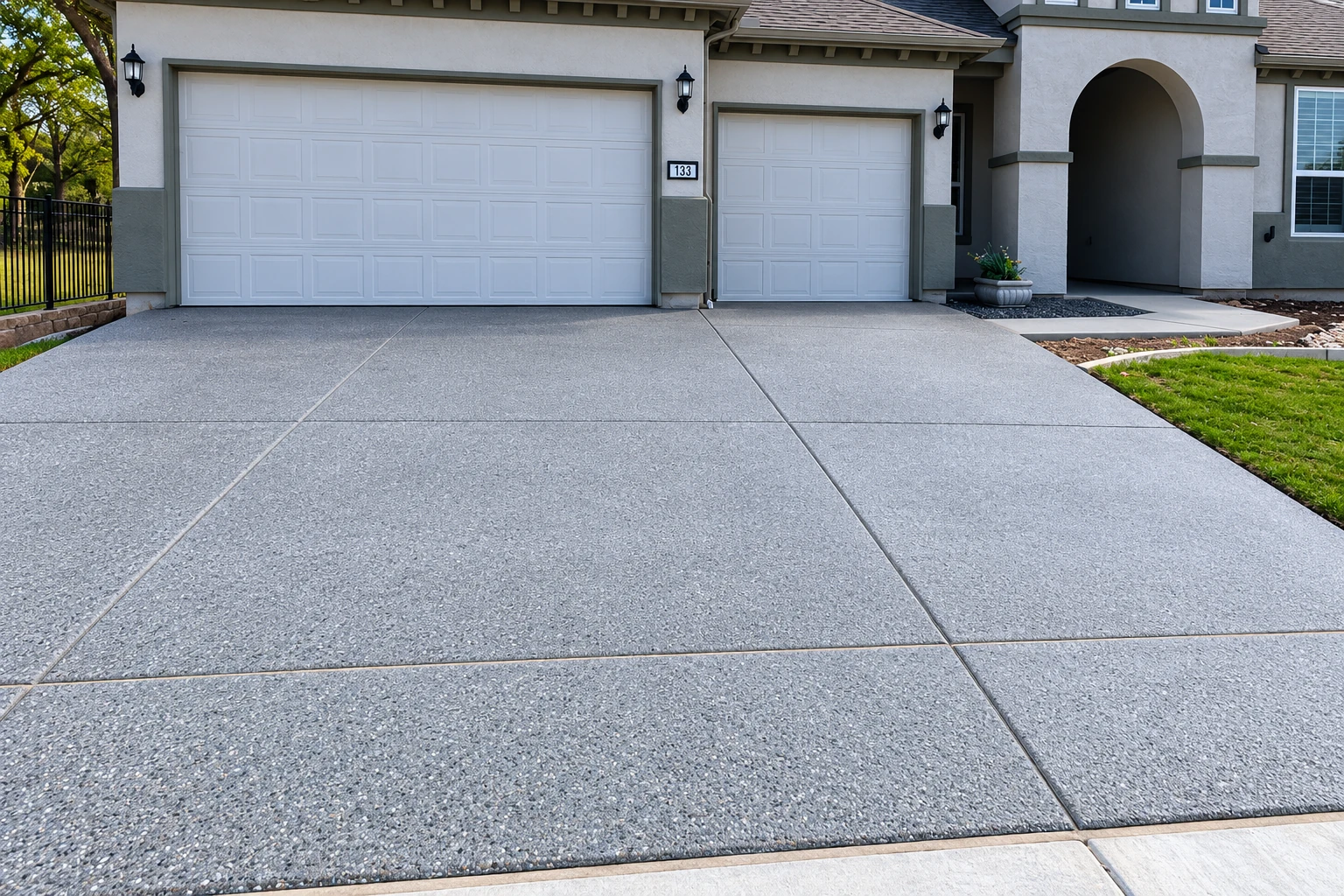
We price each driveway after I measure it, because on Fallbrook lots the grading and base work under the slab can move the cost as much as the concrete on top. A plain broom finish costs less than stamped or colored concrete, and steps, retaining walls or a long reach for the truck add to it. The driveway page covers more of what goes into the work.
Concrete can still crack, but a well-built slab usually cracks less and in places we chose. Old cracks usually come from a base that was raked level instead of dug out and packed, or from joints cut late or skipped. We dig out and pack the base, slope it to drain and cut control joints on time so a crack has a line to follow.
You can usually walk on new concrete after a short wait, but driving on it takes a good deal longer, because the slab keeps curing, slowly hardening and gaining strength, for days after the pour. The mix and the weather that week change the timing, so we tell you when your slab is ready for feet and when it's ready for your car.
Clear cars, furniture and planters from the area, tell us where sprinkler lines, drains or buried lines run, and leave a clear path for the truck to reach the forms. On grove or horse properties, keep the gates we'll use open on pour day, so the truck isn't held up while the concrete is waiting in the drum.
Some can. The County says certain structures that meet specific requirements, such as size and location, may be exempt from building permits. Whether your slab, wall or footing qualifies turns on those details, so we check with the County before we start rather than guess.
The County has amended the state building code to require four safety measures for pools and spas in the unincorporated areas it serves, and Fallbrook is one of them. If your pool deck is part of new pool or spa work, the project has to account for those measures, and we plan the deck around them.
Our phone hours run from 8 AM to 9 PM every day of the week, so you can call (951) 477-4538 after work or on a weekend, or describe your project on our contact form.